Introduction
A domain auction may look simple: one name, several bidders and a clock counting down. But the real work happens before the final minutes. Buyers need to decide what the domain is worth, what risks it carries and when to stop bidding.
A sound domain auction strategy is less about predicting other bidders than controlling how much you’re willing to pay. Research the listing, assess its commercial value and calculate the full cost before emotions take over.
There’s no universal formula for valuing a domain. A short, memorable name may attract attention, but that doesn’t guarantee demand or make it a good fit for a business. Buyers need a consistent process that separates evidence from excitement.
Analysis of Listings and Buyers
Not all listings are alike. Some auctions feature domains with an established history; others involve newly registered names, domains sold by their current owners or expired domains being resold. Each type raises different questions about ownership, history and transfer. A domain auction strategy should account for these differences from the start.
Start by confirming what’s being sold. Careful auction listing research means checking the spelling, extension and auction terms, and finding out whether the listing includes only the domain or other assets as well. A familiar phrase in an unfamiliar extension may appeal to a very different audience than the same phrase in a widely recognised one. This domain auction strategy keeps the buyer focused on the details that affect value.
Buyers also have different goals. A company choosing a primary brand name may prioritise clarity and recall. An investor may focus on resale potential, while a project owner may have a specific use in mind. Each buyer might set a different limit for the same domain, but only if the intended purpose is clear.
Research should go beyond a quick search for similar names. Review the domain’s past use, available records and reputation, looking for anything that could affect its future. A previous site may have built legitimate recognition—or left problems that make the name harder to trust. As part of a domain auction strategy, this research helps separate a promising listing from a risky one.
Key Factors
Ownership and transfer. Include domain ownership checks in your domain auction strategy: confirm who controls the domain and whether the seller can transfer it under the auction rules. Review the registrar and marketplace process, transfer timing, payment conditions and any restrictions in the listing. Unclear ownership or transfer requirements are significant risks, not minor administrative details.
Check for spelling conflicts, similar brands and potential trademark disputes. Winning an auction doesn’t settle legal questions or guarantee the right to use a name freely. If your planned use could raise a conflict, seek professional advice before bidding.
History and fit. A domain’s past can affect its future value. Review its previous content and use, and look for signs of a damaged reputation. With expired domains, don’t let an appealing name distract you from a problematic history. A careful domain auction strategy weighs that history against the domain’s potential.
Consider practical fit as well as general appeal. Is the name easy to say, spell and remember? Does it suit your audience, business model and the places customers are likely to encounter it? If people will need it explained, factor that into your valuation.
Value evidence. Comparable sales can help define a range, but they aren’t a price list. Look for examples that match the domain’s extension, length, meaning and likely buyer pool. A headline sale for a rare, highly sought-after name may tell you little about a less distinctive one. Use comparable sales as one part of a domain auction strategy, not as a reason to copy another buyer’s price.
Use several reference points and treat them cautiously. Public reports may leave out important context, while asking prices show what sellers hope to get—not what buyers have paid. The aim isn’t to find an exact match, but to build a reasonable estimate from imperfect evidence.
Total cost and limit. The winning bid is only part of the cost. Include auction fees, renewals, transfer charges and any legal or technical work. Check whether fees are fixed or based on the purchase price, and review the rules for payment deadlines and penalties for non-payment. A complete domain auction strategy accounts for these costs before bidding begins.
Set your bidding limit based on the domain’s value to you, not on the time already spent researching it. Start with a conservative estimate of the benefits, subtract expected costs and account for uncertainty. If you’re buying mainly to resell, consider how long it might take to find another buyer and how difficult that could be.
Write down your limit before the auction starts. Decide whether it includes fees, what increments you’ll bid in and what new information might justify changing it. Without clear rules, a late bid from a rival can make an arbitrary price feel like one you have to match.
The Auction Scenario
Imagine a buyer considering a short domain for a new product. Several bidders join, and the price climbs quickly. Before bidding, the buyer confirms the transfer process, reviews the domain’s history, checks for obvious conflicts and compares it with relevant completed sales. This domain auction strategy gives the buyer a reasoned basis for setting a maximum.
The research supports a maximum value, but fees and renewal charges push the total cost above the bid itself. The buyer sets a limit that includes those costs and treats each bid as a separate decision, not a test of nerve. Once the price passes that limit, the domain no longer makes sense. Sticking to this domain auction strategy prevents the rising price from replacing the original valuation.
Another bidder may have a different goal or a higher tolerance for risk. That doesn’t mean the buyer’s analysis is wrong. The disciplined choice is to stop, note what the auction revealed and reconsider only if new facts change the valuation. Chasing the price because the clock is ticking turns research into an excuse.
A quiet auction doesn’t necessarily mean a bargain. Few bidders may signal limited demand, a narrow use case or a listing that needs more research. The buyer still has to decide whether the domain is worth its price on its own merits.
Conclusion
A strong domain auction strategy combines verification, valuation and restraint. Confirm what’s being transferred, understand the domain’s history, use comparable sales carefully and include all fees in the total cost.
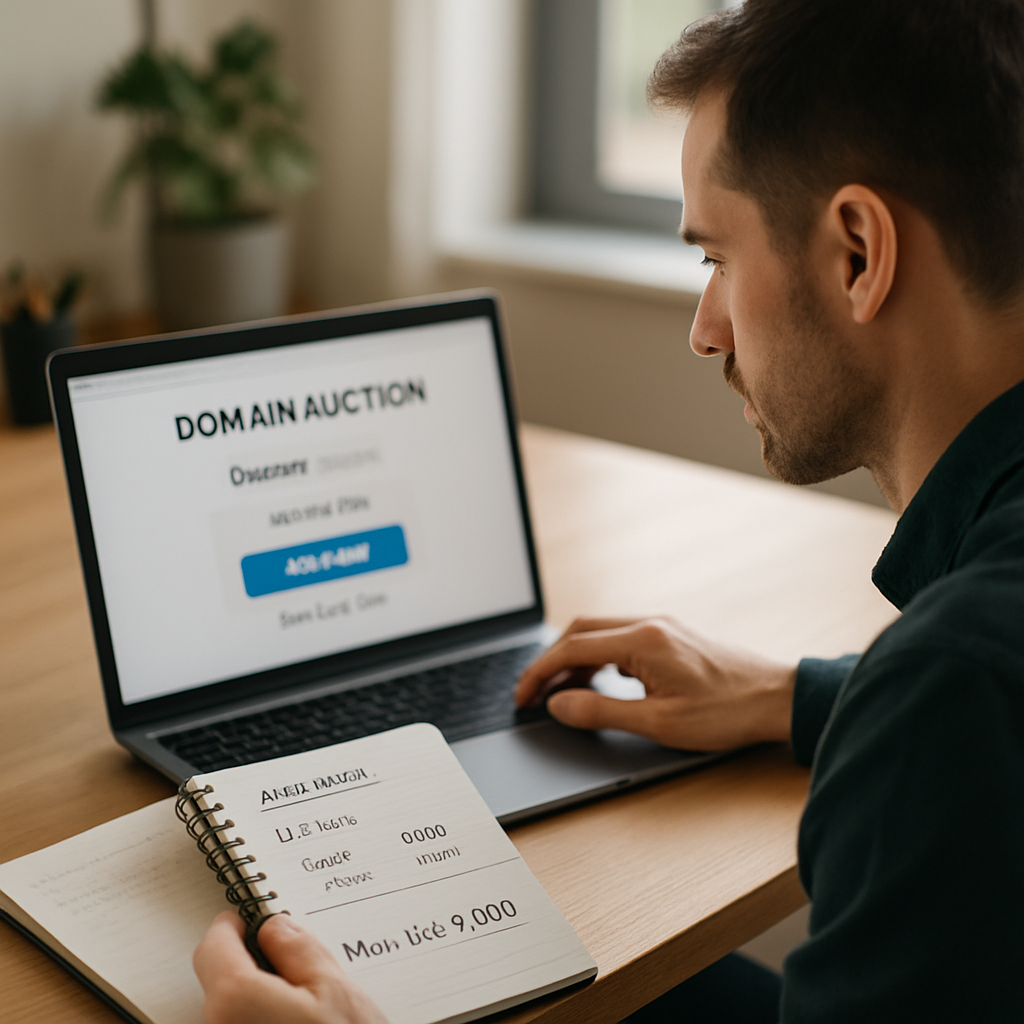
Your bidding limit puts that work into practice. Set it before the pressure builds, tie it to a clear purpose and be ready to walk away. You can revisit a missed purchase; you can’t undo an undisciplined overpayment.